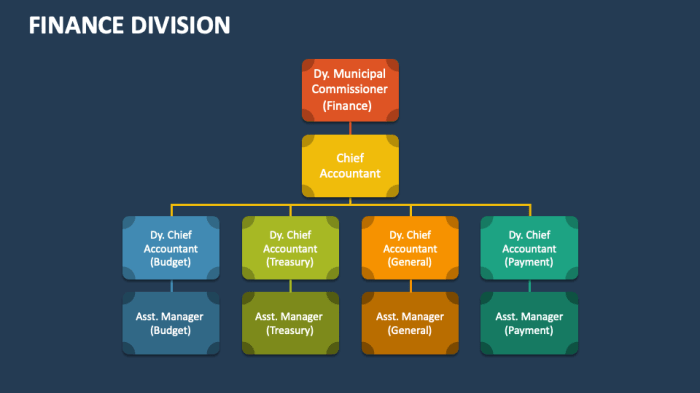
Understanding the role of finance division in a company is essential for anyone looking to grasp how organizations thrive in a competitive landscape. The finance division is not just about crunching numbers; it serves as the backbone of strategic decision-making, guiding companies through financial challenges and opportunities.
With responsibilities that range from financial reporting and analysis to supporting overall business strategies, this division plays a critical role in shaping the financial health of the company. The expertise of finance professionals ensures that businesses remain agile and informed, ultimately driving growth and sustainability.
Role of Finance Division in a Company
The finance division plays a crucial role in ensuring the financial health and sustainability of a company. Its responsibilities extend beyond mere number crunching; it is integral to strategic planning and decision-making processes that shape the future of the organization.
Primary Responsibilities of the Finance Division
The finance division is tasked with a variety of essential functions, including but not limited to:
- Budgeting and forecasting: Developing budgets that align with corporate strategy and predicting future financial performance.
- Financial management: Overseeing the company’s financial assets and liabilities, ensuring optimal cash flow and liquidity.
- Risk management: Identifying financial risks and implementing strategies to mitigate them.
- Investment analysis: Evaluating potential investment opportunities and their impact on the company’s financial health.
Support for Strategic Decision-Making
The finance division is integral in supporting strategic decisions through data-driven insights. By analyzing financial data, the finance team helps executives understand the implications of various strategic options. This enables leadership to make informed choices, whether it involves entering new markets, launching products, or reallocating resources.
Importance of Financial Reporting and Analysis
Financial reporting and analysis are vital components of business operations, allowing stakeholders to assess the financial performance of the company. Regular reports provide transparency and facilitate informed decision-making among investors and management. Moreover, financial analysis helps identify trends, uncover inefficiencies, and drive operational improvements.
Finance Licenses
Finance licenses play a pivotal role in the professional development of individuals within the finance department. Obtaining the relevant licenses not only enhances expertise but also boosts career prospects.
Finance Licenses Required
Various finance licenses are essential for career advancement, including:
- Certified Public Accountant (CPA): A license for accountants, essential for those involved in auditing and financial reporting.
- Chartered Financial Analyst (CFA): Focuses on investment analysis and portfolio management.
- Financial Risk Manager (FRM): Specializes in risk management and is highly regarded in the financial sector.
Importance of Obtaining Relevant Licenses
Acquiring relevant licenses is crucial for career advancement in finance. These certifications not only demonstrate expertise but also enhance credibility with clients and employers. They can lead to greater job opportunities and higher earning potential.
Process of Acquiring Finance Licenses

The process of obtaining finance licenses typically involves:
- Meeting educational requirements: Most licenses require specific degrees or coursework.
- Passing examinations: Candidates must pass rigorous exams that test their knowledge and skills.
- Gaining relevant experience: Many licenses require practical experience in the finance field.
Finance Lawyer
A finance lawyer plays a critical role in corporate finance, providing legal counsel that helps companies navigate complex financial regulations and transactions.
Role of a Finance Lawyer
Finance lawyers are responsible for:
- Structuring deals: Ensuring that financial transactions comply with applicable laws and regulations.
- Drafting and reviewing contracts: Creating legal documents that protect the interests of the company.
- Advising on compliance: Guiding companies on regulatory compliance to minimize legal risks.
Examples of Legal Issues Handled
Finance lawyers often deal with a variety of legal issues, such as:
- Merger and acquisition agreements: Ensuring legal compliance during corporate mergers or acquisitions.
- Securities regulation: Advising companies on issuing stocks or bonds in compliance with securities laws.
- Bankruptcy proceedings: Assisting companies during financial distress and restructuring efforts.
Importance of Legal Expertise in Finance
Having legal expertise within the finance division is essential to mitigate risks associated with financial transactions. It ensures that the company adheres to regulations, preventing costly legal disputes and enhancing the company’s reputation in the market.
Finance Professionals
Finance professionals bring diverse skills and expertise to an organization, playing a significant role in maintaining its financial health.
Types of Finance Professionals
Within a finance division, various roles exist, including:
- Financial analysts: Responsible for analyzing financial data and providing insights.
- Accountants: Manage financial records and prepare financial statements.
- Treasurers: Oversee an organization’s budgets, investments, and cash flow.
- Compliance officers: Ensure adherence to financial regulations and internal policies.
Skills and Qualifications Needed
Finance careers require specific skills and qualifications, such as:
- Analytical thinking: The ability to interpret financial data and make strategic decisions.
- Attention to detail: Ensuring accuracy in financial reporting and compliance.
- Communication skills: Effectively conveying financial information to non-financial stakeholders.
Impact of Finance Professionals on Financial Health
Finance professionals significantly influence a company’s overall financial health by providing insights that drive effective decision-making. Their analytical abilities and recommendations help ensure that the organization remains financially viable and competitive.
Finance Careers
The finance field offers various career paths for aspiring professionals, with numerous opportunities for advancement.
Career Paths in Finance
Finance careers encompass a range of roles, including:
- Investment banking: Involves raising capital and advising on mergers and acquisitions.
- Corporate finance: Focuses on financial management within a company.
- Financial consulting: Provides expert advice to improve financial performance.
Qualifications and Skills for Advancement
To progress in finance careers, individuals should focus on:
- Obtaining relevant certifications: Such as CPA, CFA, or ACCA, which are valued in the industry.
- Gaining practical experience: Internships and entry-level positions provide valuable insights.
- Networking: Building connections within the industry can open up new opportunities.
Typical Finance Job Titles and Responsibilities
A summary of typical finance job titles and their corresponding responsibilities is provided in the table below:
| Job Title | Responsibilities |
|---|---|
| Financial Analyst | Analyze financial data and prepare reports. |
| Accountant | Manage financial records and ensure compliance. |
| Treasurer | Oversee investments and manage cash flow. |
| Compliance Officer | Ensure adherence to financial regulations. |
Finance Companies
Several major companies are recognized for their exceptional finance divisions, leveraging them as a competitive advantage.
Major Companies with Strong Finance Divisions
Companies such as JPMorgan Chase, Goldman Sachs, and Deloitte are well-known for their robust finance departments. These organizations utilize their finance divisions to enhance operational efficiency and drive strategic initiatives.
Leveraging Finance Divisions for Competitive Advantage
Leading finance companies adopt innovative practices, such as:
- Implementing advanced analytics for better decision-making.
- Utilizing financial technology to streamline processes.
- Fostering a culture of continuous improvement within financial teams.
Innovative Practices in Finance
Innovative practices include the integration of artificial intelligence and machine learning into financial analysis, enabling companies to predict trends and optimize investments. Such advancements help finance divisions stay ahead in a competitive market.
Finance Basics
Understanding fundamental finance concepts is essential for all employees within a company, as it impacts their roles and decisions.
Fundamental Concepts of Finance
Key finance concepts include:
- Time Value of Money: The principle that money available today is worth more than the same amount in the future.
- Cost of Capital: The return rate that investors expect for providing capital to the company.
- Risk and Return: The relationship between the potential risk of an investment and its expected return.
Importance of Financial Literacy
Financial literacy is crucial for employees across various departments. It enables them to understand financial reports, contribute to budgeting processes, and make informed decisions that align with the company’s financial goals.
Essential Finance Terms and Their Meanings
A list of essential finance terms includes:
- Assets: Resources owned by the company that have economic value.
- Liabilities: Obligations that the company owes to outside parties.
- Equity: The ownership interest in the company, represented by shares.
Finance Minister
The role of a finance minister in government significantly impacts corporate finance, shaping the economic landscape in which businesses operate.
Role of a Finance Minister
A finance minister is responsible for formulating and implementing economic policies that affect taxation, government spending, and public debt management. These decisions directly influence the finance divisions within companies by altering market conditions and regulatory frameworks.
Impact of Government Financial Policies
Government financial policies, such as tax reforms and fiscal spending, can either facilitate or hinder corporate growth. Businesses must adapt their financial strategies in response to these policies to maintain compliance and optimize their operations.
Significant Changes Initiated by Finance Ministers
Examples of impactful changes include tax cuts that stimulate investment or austerity measures that tighten budgets. Such initiatives can reshape industry dynamics and require companies to reassess their financial strategies.
Finance Transformation
Finance transformation involves reengineering financial processes to enhance efficiency and effectiveness within an organization.
What Finance Transformation Entails
Finance transformation encompasses:
- Streamlining processes: Reducing redundancies and increasing efficiency in financial operations.
- Adopting technology: Implementing software solutions that automate and optimize financial tasks.
- Enhancing data analytics: Utilizing advanced analytics to gain insights and drive decision-making.
Methods for Successful Implementation
To ensure successful finance transformation, organizations should:
- Engage stakeholders: Involving key stakeholders in the transformation process fosters buy-in and support.
- Invest in training: Providing adequate training ensures that finance teams can effectively use new technologies.
- Measure progress: Regularly assess the transformation’s impact on financial performance and operations.
Case Studies of Finance Transformations
Several companies have successfully undergone finance transformations, such as GE, which implemented new software solutions to streamline financial reporting and analytics. Such efforts have led to improved efficiency and better decision-making capabilities.
Finance Jobs
The finance division offers a variety of job roles, each contributing to the overall functionality and success of the organization.
Different Job Roles in the Finance Division
Key job roles within the finance division include:
- Budget Analyst: Prepares budget reports and monitors spending.
- Credit Analyst: Evaluates credit data and financial statements to determine the risk of lending to individuals or companies.
- Financial Controller: Oversees the financial reporting and regulatory compliance processes.
Qualifications and Certifications for Finance Jobs
Qualifications beneficial for securing finance jobs often include:
- Bachelor’s degree in finance, accounting, or related fields.
- Professional certifications such as CPA or CFA.
- Hands-on experience through internships or entry-level positions.
Salary Ranges for Various Finance Positions
The following table compares typical salary ranges for various finance positions:
| Job Title | Salary Range |
|---|---|
| Financial Analyst | $60,000 – $85,000 |
| Accountant | $50,000 – $70,000 |
| Financial Controller | $90,000 – $120,000 |
| Compliance Officer | $70,000 – $100,000 |
Finance Technology
Technology is revolutionizing the finance division, leading to more efficient and accurate financial processes.
Transforming Finance Through Technology
Emerging technologies such as artificial intelligence and blockchain are reshaping financial operations. These innovations enhance data analysis capabilities and automate routine tasks, allowing finance professionals to focus on strategic initiatives.
Emerging Technologies Affecting Financial Processes
Key technologies impacting finance include:
- Robotic Process Automation (RPA): Automates repetitive tasks, improving efficiency.
- Big Data Analytics: Enables deeper insights into financial trends and consumer behavior.
- Cloud Computing: Allows for scalable financial solutions and easier data accessibility.
Software and Tools Commonly Used in Finance
Finance departments frequently utilize software tools such as:
- QuickBooks: For accounting and bookkeeping.
- Tableau: For data visualization and analysis.
- Microsoft Excel: A staple for financial modeling and reporting.
Finance Statement
Finance statements are essential documents that provide insights into a company’s financial performance and position.
Definition and Significance of Finance Statements
A finance statement is a formal record that summarizes the financial activities of a business. These statements are critical for stakeholders to assess financial health, performance, and compliance.
Types of Finance Statements and Their Purposes
Key types of finance statements include:
- Income Statement: Reflects revenues, expenses, and profits over a specific period.
- Balance Sheet: Provides a snapshot of the company’s assets, liabilities, and equity at a given time.
- Cash Flow Statement: Shows the inflow and outflow of cash, highlighting liquidity.
Guide to Interpreting Key Financial Statements
Understanding how to interpret financial statements is crucial for stakeholders:
- Analyze trends: Look for patterns in revenue and expense growth.
- Assess ratios: Calculate key ratios such as return on equity (ROE) and debt-to-equity (D/E) to gauge performance.
- Compare against benchmarks: Evaluate performance against industry standards or competitors.
Finance Specialist
Finance specialists possess specialized knowledge and skills that are vital to the finance division.
Roles and Responsibilities of a Finance Specialist
Finance specialists typically handle:
- Budget preparation: Assisting in the development and management of budgets.
- Financial analysis: Conducting detailed analyses to inform business decisions.
- Reporting: Preparing financial reports for management and stakeholders.
Educational Background and Skills Required
Individuals aspiring to become finance specialists often possess:
- A degree in finance, accounting, or business.
- Strong analytical skills and proficiency in financial modeling.
- Attention to detail and effective communication abilities.
Career Progression Opportunities
Finance specialists have various career progression opportunities, including:
- Moving into management positions, such as finance manager or director.
- Specializing further in areas like risk management or financial planning.
- Transitioning to consulting roles to provide expert financial advice.
Finance Strategy
A well-defined finance strategy is fundamental for achieving a company’s business objectives.
Concept of Financial Strategy
Financial strategy involves planning for the future financial needs of the organization, ensuring resources are allocated effectively to support business goals.
Developing Effective Finance Strategies
To develop effective finance strategies, companies should:
- Align financial goals with overall business objectives.
- Conduct regular financial assessments to identify areas for improvement.
- Incorporate flexibility to adapt to changing market conditions.
Successful Finance Strategies Implemented
Several companies have successfully implemented finance strategies that resulted in growth and efficiency. For instance, companies like Microsoft have focused on strategic investments in technology and innovation, leading to sustained competitive advantage.
Wrap-Up
In summary, the finance division is pivotal in steering a company towards success through informed decision-making and strategic financial management. As businesses continue to evolve, the importance of a well-functioning finance division becomes even more pronounced, making it a critical component of any organization’s structure.
Questions and Answers
What are the primary responsibilities of the finance division?
The finance division is responsible for financial planning, reporting, analysis, budgeting, and managing cash flow.
How does the finance division support strategic decision-making?
It provides critical financial insights and forecasts that inform business strategies and operational decisions.
Why is financial reporting important?
Financial reporting is crucial for transparency, compliance, and performance measurement, helping stakeholders understand the company’s financial health.
What skills are needed for finance professionals?
Finance professionals need strong analytical skills, attention to detail, proficiency in financial software, and good communication abilities.
How can one advance in a finance career?
Advancing in a finance career often requires continuous education, obtaining relevant certifications, and gaining diverse experience within the field.


